Category: Uncategorized

  • South Sudan National Association of Sign Language Interpreters (SSNASLI) Launched to Break Communication Barriers for Deaf Community in South Sudan

    South Sudan National Association of Sign Language Interpreters (SSNASLI) Launched to Break Communication Barriers for Deaf Community in South Sudan

     National Association of Sign Language Interpreters launched to advancing inclusion, accessibility, and equal communication for the Deaf community across the country.

    By Adia Jildo

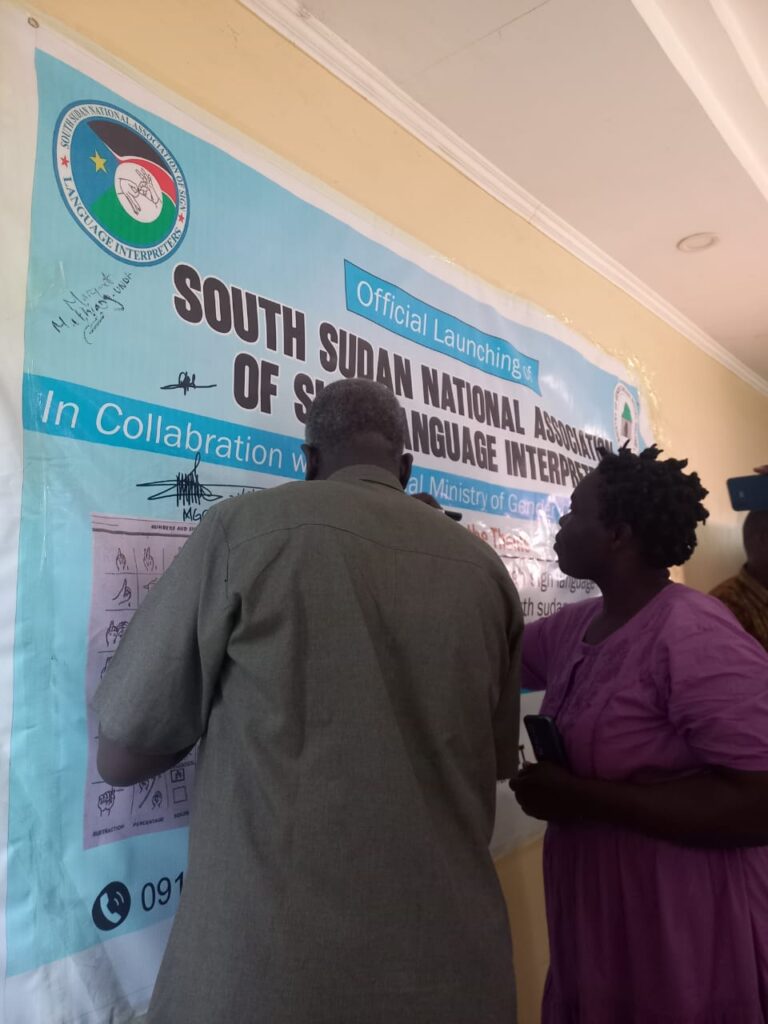
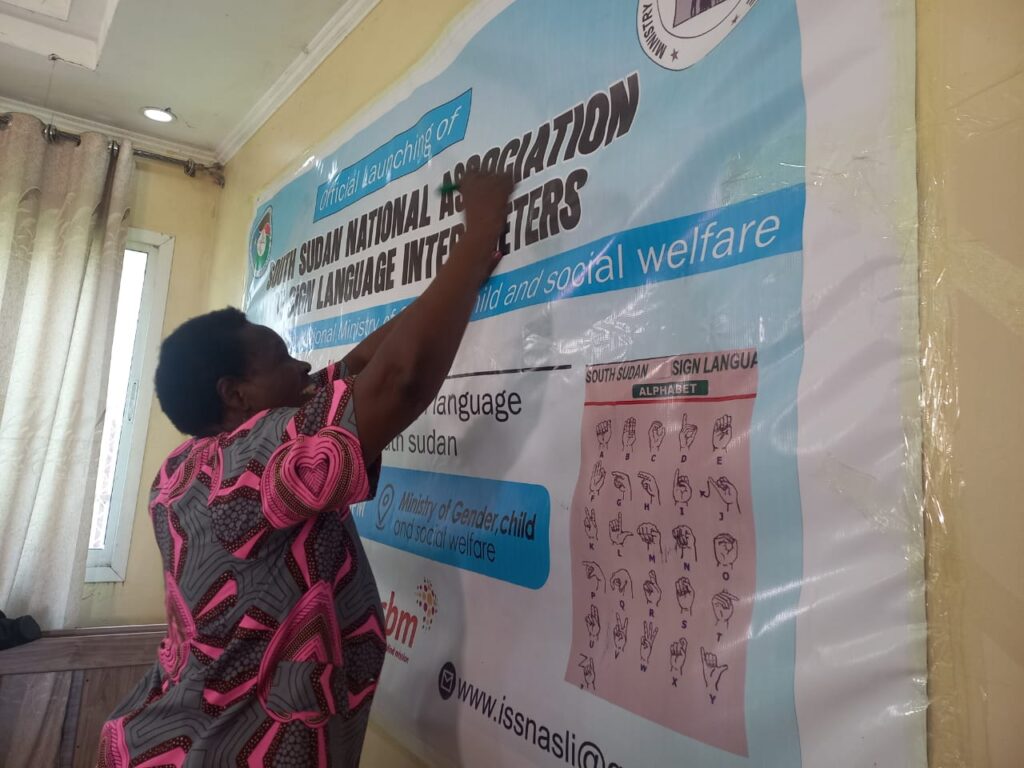
    First South Sudan National Association of Sign Language Interpreters (SSNASLI) launched with the aim at advancing inclusion, accessibility, and equal communication for the Deaf community across the country.

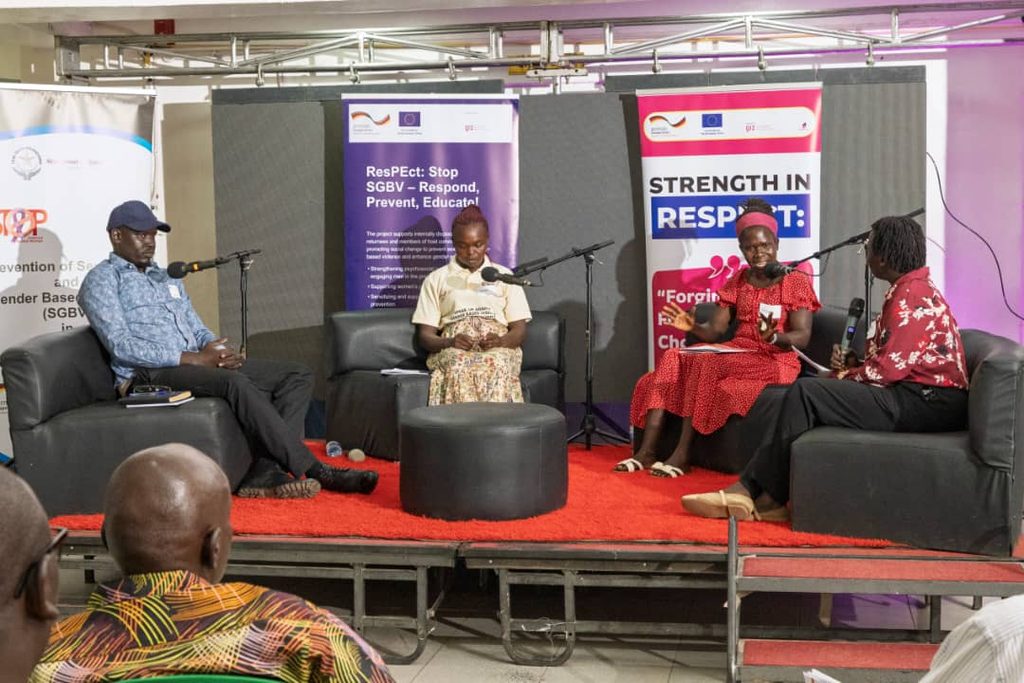
    The launch event brought together government officials, representatives from the Deaf community, development partners, civil society organizations, and members of the media under the theme: “Breaking Communication Barriers: Promoting Inclusion Through Sign Language Interpretation in South Sudan.”

    The Chairperson of South Sudan Launches National Association of Sign Language Interpreters (SSNASLI) Sebit Juliano Lado said the association will enable and promote professional standards in sign language interpretation, provide training and certification for interpreters, and advocate for the integration of sign language services in public and private institutions nationwide.

    “This is the beginning of a movement for inclusion, dignity, and equal communication for all,” said Sebit Juliano Lado. “Communication is a fundamental human right, and no one should be left behind.”

    “There is urgent need to address communication barriers faced by deaf individuals in accessing essential services such as education, healthcare, justice, and employment,” he said.

     The Chairperson of South Sudan Launches National Association of Sign Language Interpreters (SSNASLI) Sebit Juliano Lado calls upon the Government of South Sudan, donors, NGOs, and the private sector to support the association to fulfil its mission and collaborate in building an inclusive society where all citizens can fully participate.

    South Sudan National Union of the Deaf of Hearing Impairment Peter Kachinga said the interpreter association will help interpreters advocate for those with hearing impairment hence bringing hope for improved communication access and recognition of their rights.

    “There is a lack of sign language interpreters. Access to information becomes a bigger gap, even for these children learning in schools. To implement the inclusion, we need to bring the society together where the language will be known,” he said.

    “We have the right to participate and give opinions.

    Magret Mathiang, representative of NGO from UNDP, stated that the sign language interpreters link those living with disability with partners to enable understanding of the circumstances.

    “Our sign language is not fully-fledged. The association should not be left behind,” she stated, emphasizing the need for partners’ commitment to support persons living with disability,” she urged highlighting the critical role interpreter’s play in bridging communication gaps.

    Director of persons living with disability in South Sudan Emmanuel Lubari persons with earing impairment have been left behind, mainly due to few or no professional interpreters.

    “We only have one school for interpreters. Not accessing health, education, justice, and more services,” urging people to join the association to enable exclusive access to information.

    “This body that we are launching today should plan, train, educate the association and its activities,” said Lubari.

    The director General for Social Welfare at the Ministry of Gender Child and Social Welfare, Regina Ossa Lullo said the association will work to promote the welfare of persons with easing impairment, the profession development, collaboration with government, and awareness about inclusive development in South Sudan

    The government said it’s planning to establish the unit for persons living with disability for inclusion purposes.

    “We need to increase the numbers of translators so that those that need services can get without being excluded,” she stated, citing the challenges faced by persons with disabilities face when accessing health care.

    She called on the partners to collaborate with the government to support persons living with disability, support rehabilitation center to protect the vulnerable people.

    “We as a government are working towards social inclusion and justice,” she said.

    The ministry reaffirmed its commitment to work closely with development partners, and civil society organizations to ensure that deaf individuals have equal access to information and services.

    The Ministry of Gender under the directorate of Social Welfare also launched the models for training for sign language interpreters and the Constitution for sign language interpreters of South Sudan.

    The initiative was organised by persons with disability in collaboration with the national ministry Gender, Child, and Social Welfare under the them “Promoting Inclusion through signs language interpreters South Sudan.

    The association will work closely with government ministries, development partners, and civil society organizations to ensure that deaf individuals have equal access to information and services.

  • Pregnant Women Walk Miles for Care as Khor Malang Faces Health Service Shortages.

    Pregnant Women Walk Miles for Care as Khor Malang Faces Health Service Shortages.

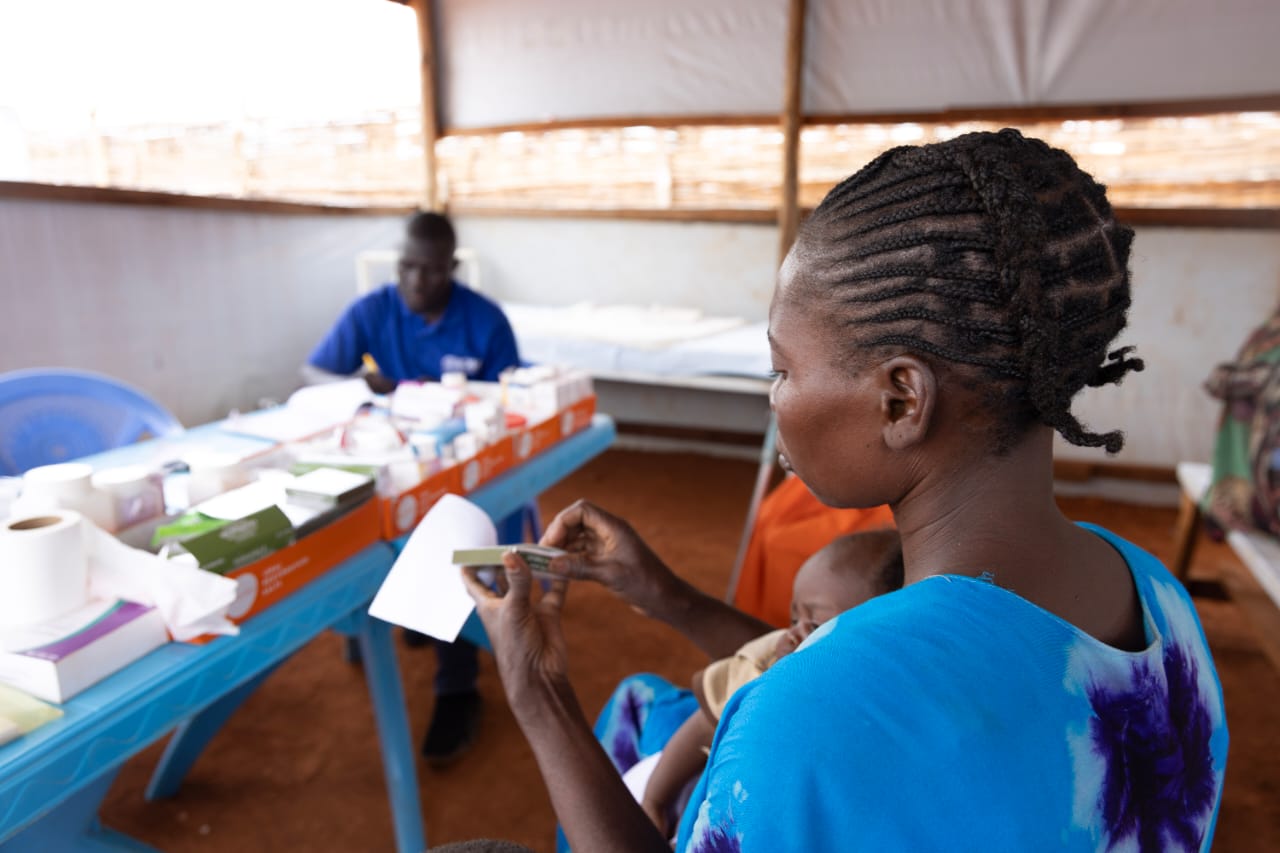
    7 months pregnant Christina Simon recently went to Wau PHCC to do a check. This is when the mobile clinic stationed at Khor Malang to help construction workers access health services advised her to seek medical attention in Wau where there are midwives.

    The journey to Wau was more turing than the sickness she said.

    Khor Malang is a 10-minute drive away from Wau town and at least 40 minutes walk.

    “There is a facility here. There is no antenatal care unit for women. I had to take a card from here and travel to Wau to get the services. No midwife or a traditional birth attendant to attend to us. If I go in labor anytime, I will have to walk or foot there because of the distance,” she said. This is Christina’s

    “There is hardly any medicine in the clinic. The population has increased with recent relocation. What we do is travel out this permanent settlement, said Fahtásio Arun Abdallah.

    Joseph Thomas, a father of 6, stated that the absence of medicine in the facility leaves many vulnerable.

    “Sometimes when there is no doctor, no medicine, we are forced to look for other medicines. Our fear is that we might lose our children. there is no clinic here that if we have money, we can buy from,” Joseph Thomas.

    Mariano Albino said, “There are times one will get a doctor, and you will be told there is no medicine. My resolution is to head back home and find a local remedy for this medicine so that I can cure my children.

    At Khor Malang, the in charge of the Khor Malang mobile clinic Charles John stated that the presence of the mobile clinic has enabled OPD and now integrated WPI.

     “We started as a mobile clinic to help the workers and now the community,” he said, adding, “Other services are lacking. These structures were for workers’ emergencies, but in the middle, there was a need for the community. Out Patient Department consultation, EPI, and now remaining RH and Malnutrition facility,” The facility was supported by IOM, but by first of April, the government run the facility.

    Before, there were no workers and people here, but now, with the resettlement, there is a need for reproductive health services here,” he said.

    Since April, the government has been handed over the health facility to support the over 2,000 population for former displaced persons who were displaced due to insecurity and the host communities of Khor-Malang.

    While core housing and safety infrastructure are active, local authorities and UN partners are continuously expanding to add schools and broader livelihood.

    The director for basic education stated that the absence of school structures has made many learners unable to continue attending schools.

    “There are no classes. When it rains, no one can attend a lesson, and not even a teacher can teach. We have over 10 teachers, over 300 primary school pupils currently, but only learn under trees. 

    The Khor Malang Permanent Settlement is a major durable-solutions housing initiative near Wau in Western Bahr el Ghazal State, South Sudan.

    The government-led initiative was built by the International Organization for Migration (IOM) and funded by Norway, with the aim to close the overcrowded Naivasha displacement camp and provides displaced families with secure land, concrete homes, and basic services.

    The $5 million initiative features durable, locally built concrete houses for over 1,000 households, provision of basic services such access to clean water systems, sanitation (latrines), health facilities, and a police station, Livelihood & Integration for both displaced individuals and host communities share the land, receiving land rights and support to engage in activities like urban farming.

  • ECRP Water Project Phase II Improves Lives of Host Communities and Refugees in Wau

    ECRP Water Project Phase II Improves Lives of Host Communities and Refugees in Wau

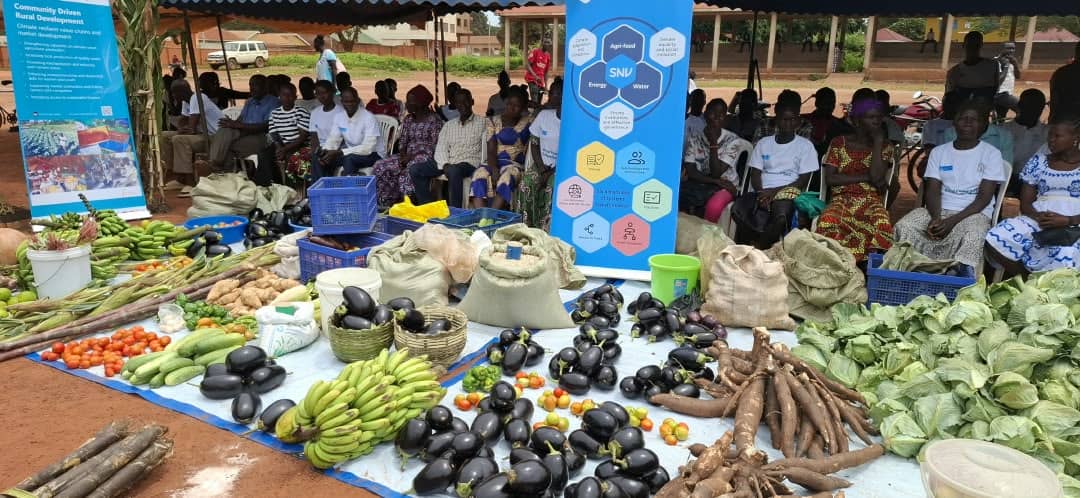
    In Wau Town, life has changed in ways residents once thought impossible. Where families used to walk long distances, pay high prices, or queue for unsafe water, clean, affordable water now reaches 2,997 households, including 200 Sudanese refugee families, every single day. The Hai Jadid Water Yard has become a source of stability, dignity, and new opportunities.

    Before the project, water scarcity shaped everything. Women woke before sunrise to search for water. People with special needs struggled the most. Fights sometimes broke out at crowded water points. Many families bought unsafe water at high prices, risking illness and financial strain.

    “This area is different now. There is water for all of us at an affordable price,” says resident Ajor Kot. “There are no more fights at water points because everyone can access water.”

    The transformation is sustained by the Operation and Maintenance (O&M) Committee, formed and trained under the Enhancing Community Resilience and Local Governance Project Phase II (ECRP II).

    The committee keeps the water yard functioning, manages user fees, and ensures repairs. With reliable access to water, they have also created a community garden, irrigated directly from the facility. The garden now generates income for committee members and brings neighbours together through shared work and shared harvests.

    Local businesses are benefiting too. “I am relieved now,” says restaurant owner Along Yin Kuany. “Before, we used to buy water and still boil it before giving it to customers. Now, clean water is easily available.”

    Equipped with a 40,000‑liter tank, the water yard has replaced unsafe sources with a reliable, community‑run service. For leaders like Mayang Mawien, Secretary of the Payam Development Committee, the impact is clear:

    “The water yard was established to serve host communities, returnees, and refugees living in Hai Jadid. It has made clean water cheaper and more accessible for everyone.”

    Today, the Hai Jadid Water Yard is more than infrastructure. It is a symbol of restored dignity, a source of livelihoods, and a model of community-led service delivery, one that, through ECRP II, implemented by the Government of South Sudan in partnership with IOM, has become a lifeline for the entire community.

  • Newly appointed SPLM secretaries and one member of the liberation council sworn in on Thursday in Juba.

    Newly appointed SPLM secretaries and one member of the liberation council sworn in on Thursday in Juba.

    The newly appointed SPLM secretaries and one member of National Liberation Council were sworn in on Thursday at SPLM house in the present of first Deputy SPLM Chairman comrade H.E James Wani Igga.

    The swearing in ceremony was attended by members of Political Bureau and SPLM national Secretariat, including government officials.

    Speaking in the swearing in ceremonies, the SPLM First Deputy Chairman, comrade James Wani Igga urges the newly appointed SPLM officials to support the government on strengthening corruption and promote democracy in all levels of SPLM function.

    Comrade Wani Igga appeals to SPLM leadership and members of SPLM to put interest of the nation first instead of their self-interest.

    He added that the SPLM party is ready for first independent election that will take place in December 2026.

    Wani told newly appointed SPLM Secretaries to bring good change in the party.

    The SPLM secretary General comrade Dr. Akol Paul Koordit urges SPLM newly appointed officials to move the country forward and remove corruption in the party.

  • Top FM receives donation of three press jackets from UJoSS

    Top FM receives donation of three press jackets from UJoSS

    Top FM 89.7, a community radio station in Juba Town Hai Sujun, received a donation of three press jackets from the Union of Journalists in South Sudan (UJOSS).
    These press Jackets will be used by reporters in community radio station for identification.
    Top FM radio is very grateful to UJOSS for the donation of press jackets. These jackets will create more visibility for staffs.

    The donation was received by Top FM station manager John wulu Deng.

  • Top FM 89.7 Rewards Loyal Listeners with Radio Distribution.

    Top FM 89.7 Rewards Loyal Listeners with Radio Distribution.

    Top FM 89.7 has today distributed radio sets to some of its loyal listeners who successfully answered questions presented by the station’s presenters during recent programs.

    Among the beneficiaries is Justin, a dedicated listener from Hai Gabat, who received his radio today. Justin expressed appreciation to Top FM 89.7 for the initiative, noting that the radio will help him stay informed and connected to the station’s programs.

    The radio sets were provided as support to Top FM 89.7 by the Association for Media Development in South Sudan (AMDISS). The initiative aims to strengthen community access to information and promote active listener engagement through radio broadcasting.

    Top FM 89.7 continues to appreciate its listeners for their support and participation and remains committed to serving the community with informative and engaging content.

  • SSPDF Secures Heglig as South Sudan Disarms SAF Soldiers, Reaffirms Neutrality in Sudan War.

    SSPDF Secures Heglig as South Sudan Disarms SAF Soldiers, Reaffirms Neutrality in Sudan War.

    The South Sudan People’s Defense Forces (SSPDF) have reiterated the country’s neutrality in the ongoing conflict in Sudan, while tightening security around the vital Heglig oil fields amid rising tensions along the border.

    Lieutenant General Johnson Olony, the SSPDF Chief Assistant for Mobilization and Disarmament, said South Sudan will not take sides in the Sudanese war but remains committed to safeguarding its territorial integrity and key national assets. He stated that forces have been placed on high alert to prevent any incursions or instability spilling over from the conflict.

    Gen. Olony further revealed that SSPDF troops have officially disarmed members of the Sudanese Armed Forces (SAF) who crossed into South Sudanese territory. He said the SAF personnel will be hosted on humanitarian grounds and relocated to safer areas within the country while awaiting conditions that allow for their eventual return to Sudan.

    Meanwhile, SSPDF Chief of Staff, Gen. Dr. Paul Nang, is currently in Ruweng Administrative Area overseeing security operations and the handling of SAF soldiers who entered the region.

    Authorities say these measures are aimed at ensuring stability along the tense border zone while maintaining South Sudan’s neutral stance in the neighboring conflict.

  • Fire Destroys Makeshift Shops in Jebel— Juba city, South Sudan

    Fire Destroys Makeshift Shops in Jebel— Juba city, South Sudan

    Juba, South Sudan | December 11, 2025

    A fire broke out early Thursday morning at around 3:00 AM in Jebel, opposite the Bank of South Sudan near Kakuma Market, destroying several makeshift shops.

    No injuries have been reported, but multiple properties were lost in the blaze. The cause of the fire is still unknown, and assessments are ongoing.

    Stay tuned for more updates on this developing story!

  • South Sudan’s Leading Journalist Returns After Eight Months of Silence.

    South Sudan’s Leading Journalist Returns After Eight Months of Silence.

    After nearly eight months of enforced silence, one of South Sudan’s most trusted journalists has resurfaced, signaling a powerful comeback in the fight for free speech and accountability. In a statement shared today, he assured compatriots that he is well and alive, emphasizing that even restricted access to this platform is a sign that “prayers for those who stand for humanity are beginning to bear fruit.”

    He urged continued support as his legal battle approaches its final stage and promised to return fully active in the coming days with his signature exposés and critiques of the “foolish, tyrannical, and concubine-guided” Juba regime.

    Quoting Martin Luther King Jr., he reminded his audience: “The arc of the moral universe is long, but it bends toward justice.” He expressed solidarity with families of those facing political persecution, affirming that “the misuse of the law for political repression is gradually losing its grip.”

    He concluded by calling on all sources to remain engaged and ready for a debrief on the next chapter of his work. This marks a significant moment for journalism and advocacy in South Sudan, as one of its most fearless voices re-emerges.

    Stay tuned and follow us for more updates on this developing story!

  • Ignorance of digital rights put South Sudanese at risk.

    Many people are unaware of their digital rights, putting them at risk of cybercrime, data breaches, and other violations of their rights.

    South Sudan relies on constitutional provisions and international human rights frameworks to safeguard individuals’ online privacy.

    The Transitional Constitution of South Sudan (2011) recognizes the right to privacy as a fundamental human right.

    Due to the lack of specific legislation, matters concerning online personal information are frequently managed through general constitutional interpretations and international human rights standards.

    Keji Jenifer, a Juba resident, says the country lacks a legal framework to safeguard citizens’ rights to privacy and data protection.

    “I must say that most South Sudanese are not aware of most of their rights, not only the right to privacy and protection. But our constitution is very clear on that. And this has been witnessed with several violations that we have witnessed over the years since our independence.”

    Keji says the lack of a legal framework resulted in security organs seizing devices of individuals without adhering to established procedures, thus infringing on their rights to privacy.

     “You will see now the court cases of the suspended first vice president, and the other accused, and their gadgets were confiscated without prior procedures. And that infringes their privacy rights. Before you use somebody’s digital gadgets or anything that comes to the person, you need to follow the legal procedure. And that can only be ordered by a public prosecutor or an order issued by a court.”

    Tito Awen, a resident of Juba, emphasized the need to improve public awareness and implement digital privacy laws.

    “So personally, the way I have been monitoring South Sudanese right away from political class and ordinary South Sudanese, I believe this is an area that needs a lot of awareness. Like the recent bill on cyber security. To me, I was thinking that public awareness would have been very important because some people may not know which one is supposed to be there and which one is not supposed to be there.”

    Thon Dhiei Ngor emphasizes the need for enhanced protections to ensure digital rights on the internet.

    “The first thing should be the law that governs the data and privacy. Because everybody is supposed to be bound by those laws. If you are a government, if you are a private individual, you are governed by that right, by that law. But now you find out that that privacy is violated every time by government agencies.”

    Emmanuel Bida, a digital expert and program manager at the Excellence Foundation, says that they are advocating for data protection laws to safeguard the personal data of online users in South Sudan.

    “Data protection is still, because South Sudan does not have data protection laws in place at the moment. But then when we talk about the right to privacy, the right to privacy is somehow protected when it comes to the constitution of South Sudan.”

    In October, digital security experts finalized drafting the country’s first Data Protection Policy Bill.

    When passed, the bill will establish the Data Protection Commission, mandated to safeguard the personal data of South Sudanese online users.

    The digital security bill’s development is facilitated by Koneta Initiative and Paradigm Initiative, in collaboration with the National Communication Authority and civil society organizations.

    This story is reported with a grant from Journalists for Human Rights under the Tackling Mis/Disinformation Project, funded by the Peace and Stabilization Program of the Government of Canada.